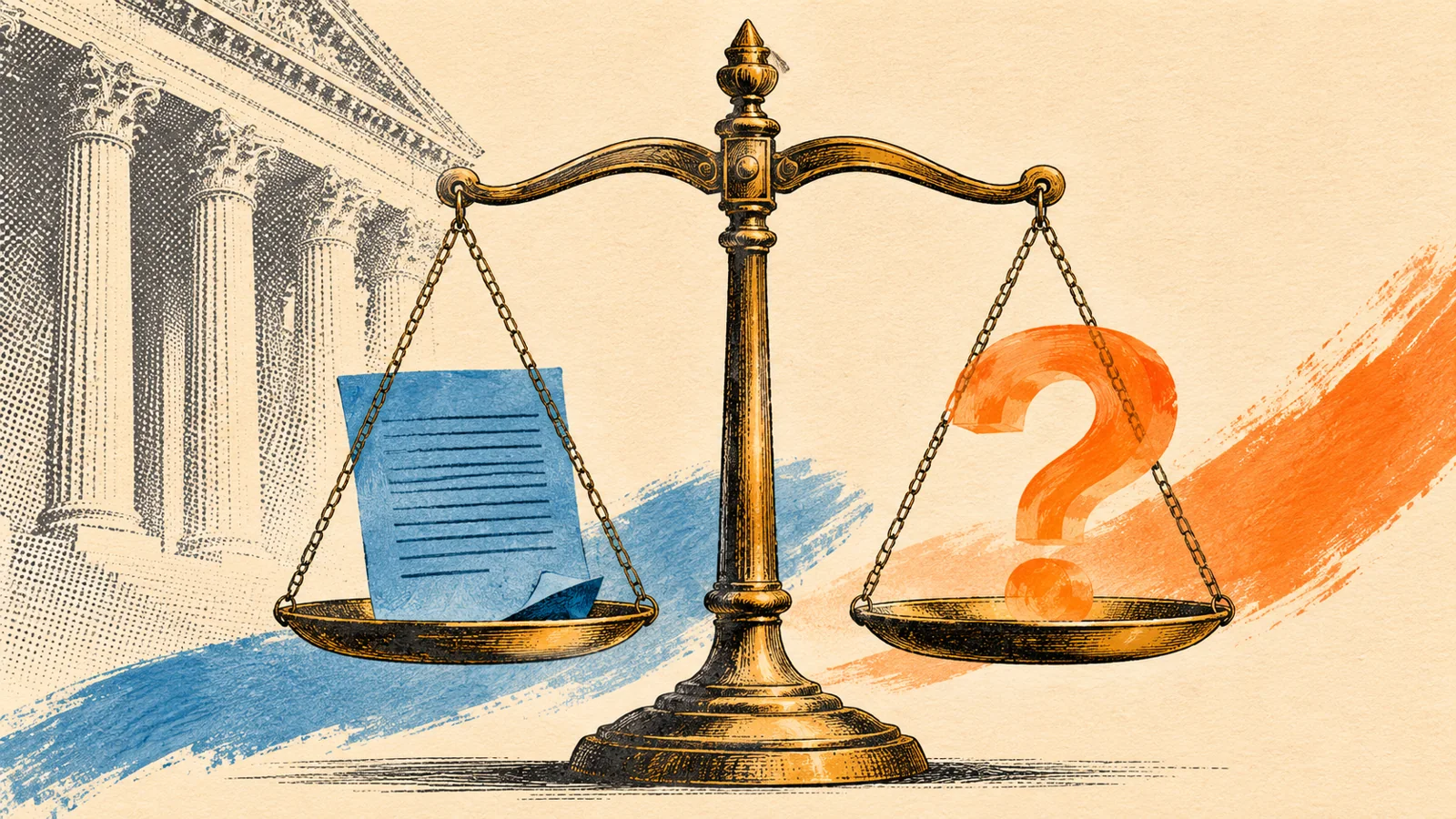
Start with one interview topic.
Before discussing a legal issue with a reporter, prepare a short note with two headings: “What we know” and “What remains open.” Choose one specific question within your expertise, such as how a public filing moves through a particular court.
Identify the source for each point.
Under the first heading, write two or three statements you can support with a current primary source, such as the relevant court document or official rule. Record the jurisdiction and the date you checked it. A filing can establish what a party alleged; it does not automatically establish that the allegation is true.
Mark the open questions.
Under the second heading, list details that are unresolved, unavailable or outside your expertise. For example, if a hypothetical filing requests a hearing, the request alone does not establish that the hearing has occurred or predict its outcome. Say what is pending instead of filling the gap with a guess.
Protect client information.
Keep confidential information and identifying client details out of the note. Before discussing any matter, check the permissions, professional obligations and restrictions that apply to you and your jurisdiction. Public availability alone does not resolve every professional obligation.
Use the note in conversation.
Keep the source and its date nearby during an interview. Explain what the document says in plain language, label your analysis as analysis, and acknowledge when an answer depends on facts you do not have. Offer to follow up if you need to verify a detail. This gives a reporter useful context while leaving editorial decisions to the publication.