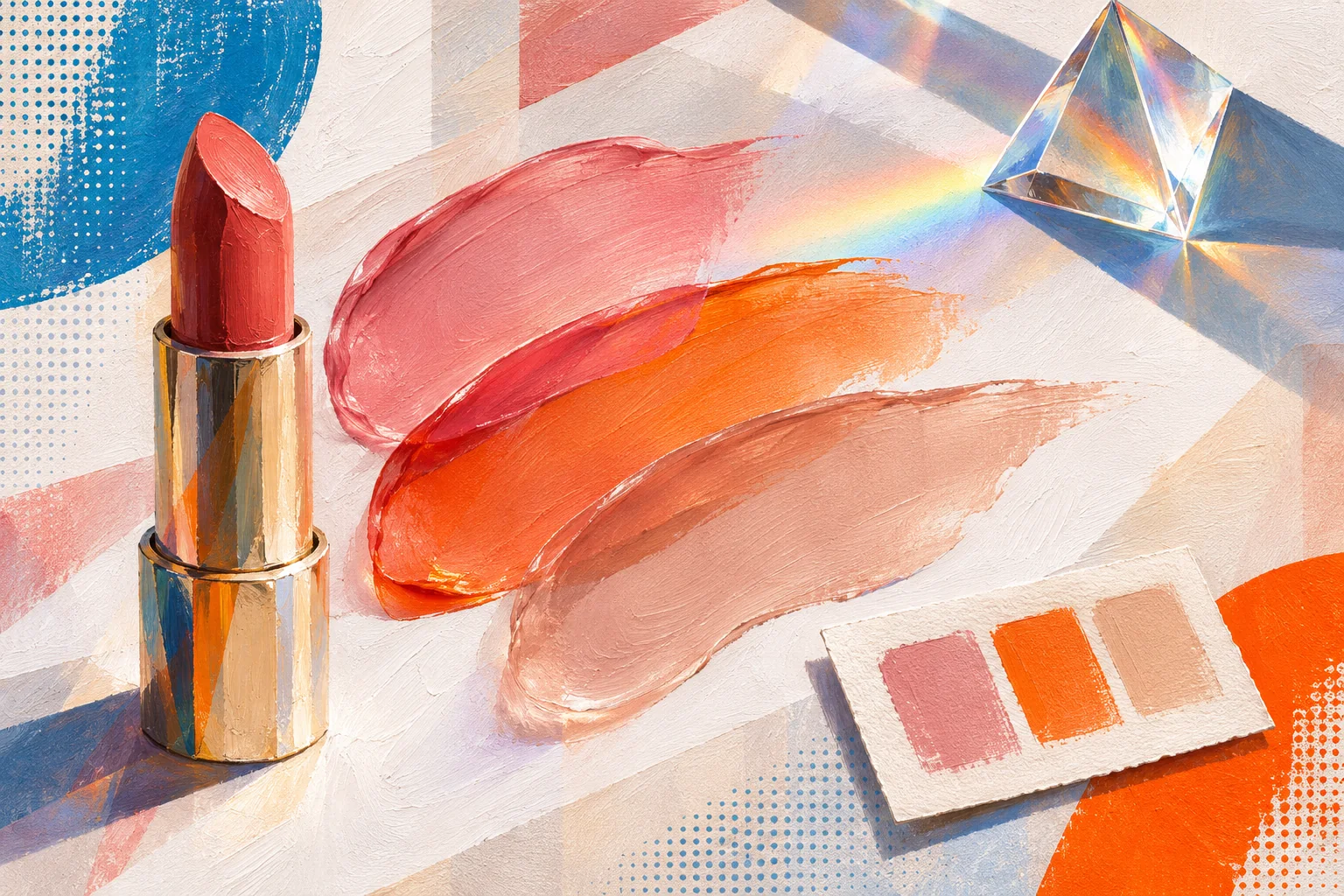
Make color easier to understand.
A shade name can suggest a mood without telling an editor much about the product. Prepare a simple reference for one shade that combines a clear image with the details someone needs to understand what they are looking at.
Show the product consistently.
Photograph the product and a representative swatch in even, neutral light. Avoid filters or heavy color edits that change its appearance. If the product looks different in the container and when applied, show both and label them clearly. Screen settings and lighting can change how a color appears, so describe images as a guide rather than a guarantee of an exact match.
Add the practical details.
Include the exact product and shade names, the finish as you describe it, the size, current price and availability, plus any application information needed to interpret the swatch. If you provide images of a product on skin, identify relevant lighting and application details and obtain permission from the person pictured. Do not imply one example shows how a shade will look on every person.
Check the reference before sharing.
Compare the image and description against the actual product and confirm details with the people responsible for it. Have the original image file and photographer credit ready, and make sure you have permission to share the image for editorial consideration. Substantiate any product claims you choose to include.
Offer it to a relevant editor.
Read the work of a beauty writer who covers the category. Send a short note explaining the shade and why it may fit their coverage, with the reference available if useful. If you offer a sample, ask first and follow the outlet’s policies. The editor decides independently whether and how to cover it.