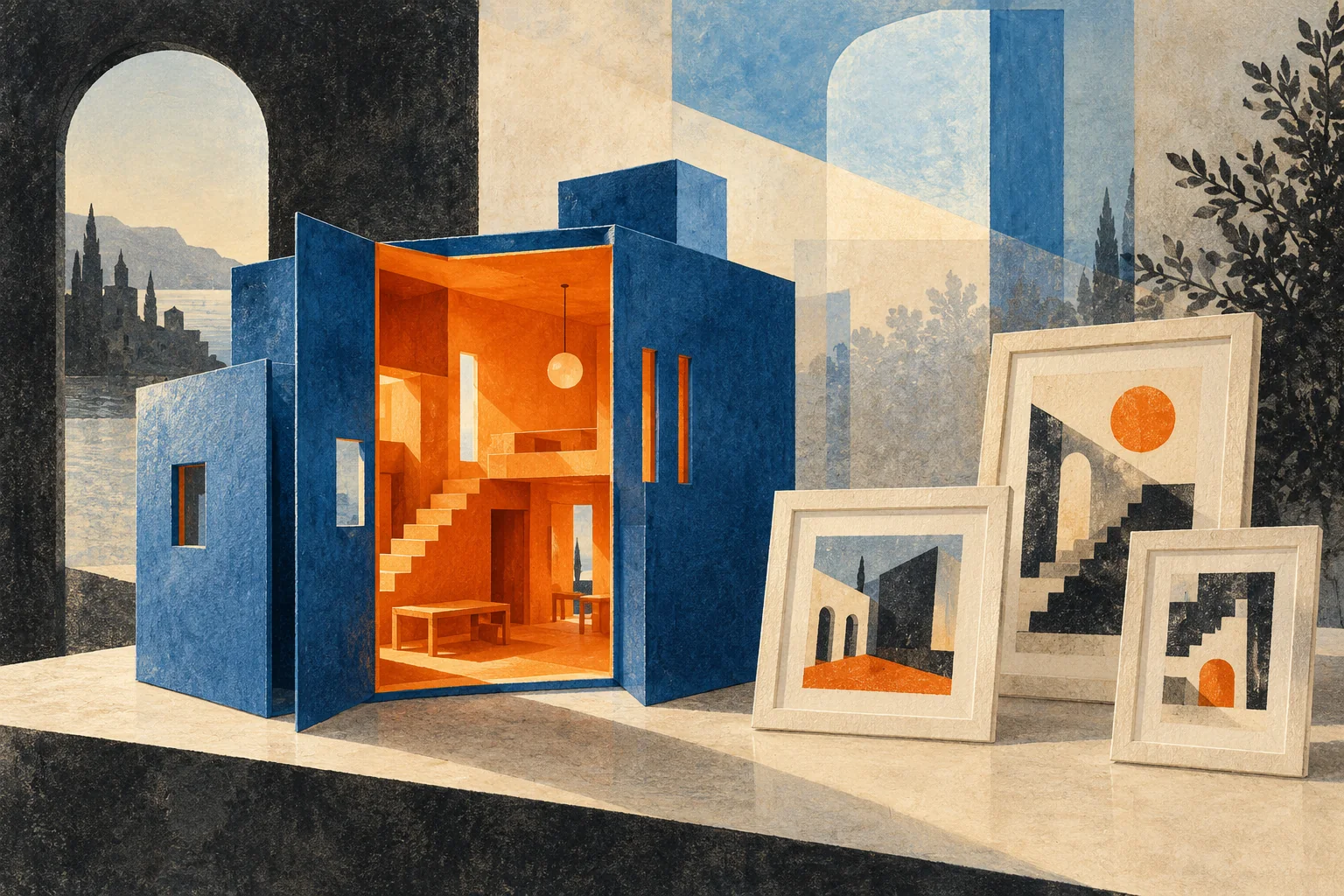
Choose one project and one clear idea.
A beautiful room catches the eye. A useful story explains why it looks and works the way it does. Choose a completed project you have permission to share, then write one sentence about the design challenge it addresses. It might be a compact room that needed to serve multiple purposes or a home designed around a particular view. Use only details you can verify.
Select three complementary images.
Choose a wide photograph that establishes the space, a second that shows how people move through or use it, and a detail that illustrates the design decision. Together, the three views should help an editor understand the project without needing a lengthy presentation. The same approach works for architecture, interiors, and product design when the images suit the work.
Write a caption for each view.
Keep each caption short and specific. Identify what the image shows, then explain the relevant decision: “A built-in bench creates seating without narrowing the walkway,” for example. That is a hypothetical caption, not a claim about your project. Check the materials, location, completion date, and every other detail before sharing.
Clear permissions and credits.
Confirm that the client, photographer, and any other relevant rights holders have authorized the proposed use. Agree on credits and any restrictions, including whether the project can be shared publicly or with a particular publication. Avoid disclosing a private address or identifying a client without permission. Offer a link to approved, publication-ready files and include the proper photographer credit.
Offer the idea to a relevant editor.
Find a publication that covers projects like yours and read its recent work. In a short note, explain the design challenge, the decision, and why its readers might find the solution interesting. Offer the three views and captions as a starting point. Editors may request more material or take a different angle, and coverage is never guaranteed.