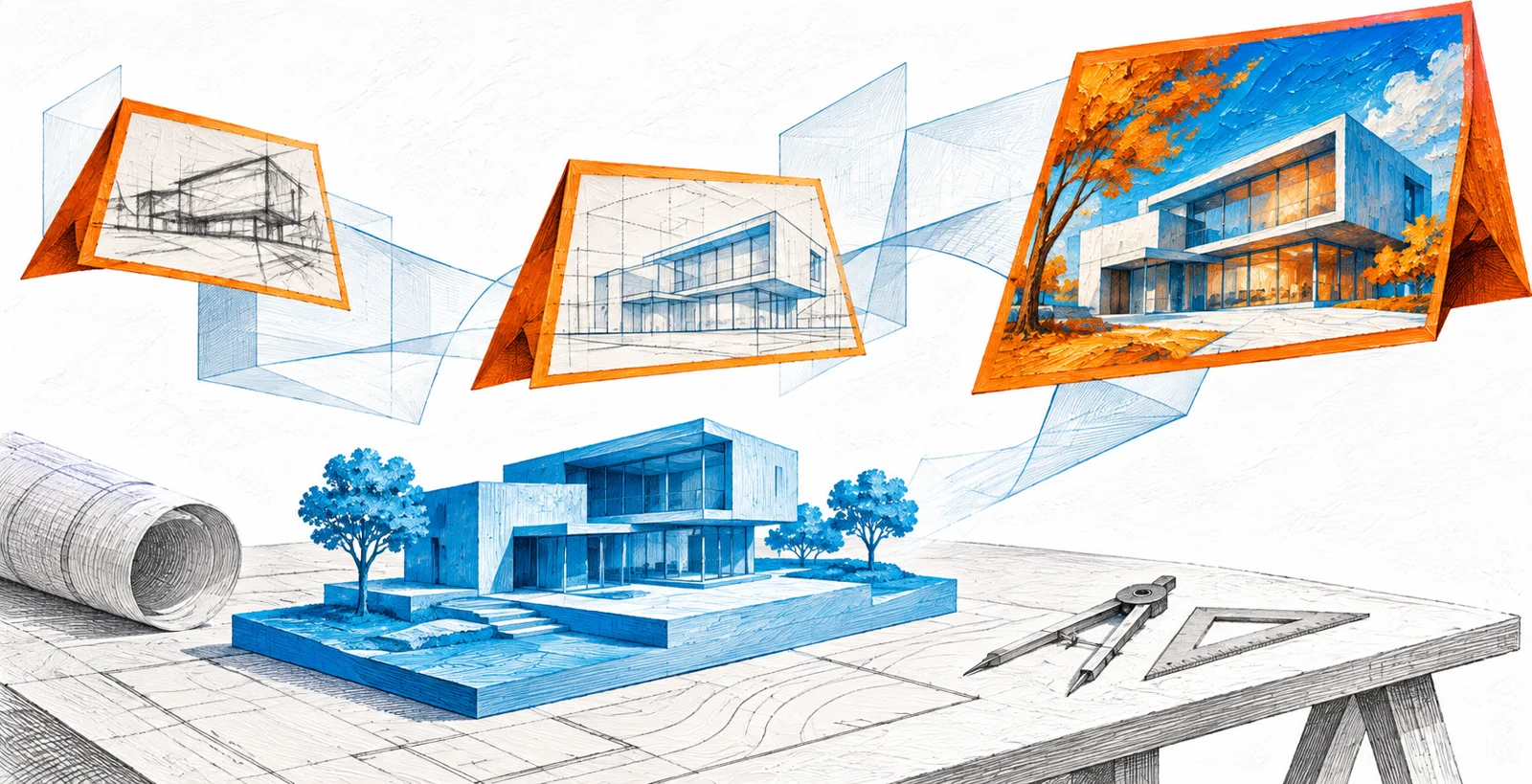
Choose a project you can discuss.
A finished building shows the result. A short timeline can help an editor understand how it came to be. Select a project you have permission to share and identify a single design question that shaped it. Confirm with the client and project team which details, dates, and images may be made public.
Mark three useful moments.
Write down when the project began, one decision or turning point, and when the relevant work was completed or opened. Explain each in one sentence. For a hypothetical renovation, the middle moment might be the decision to retain an existing wall to preserve a view. Use precise dates only when you can verify them; a month or year can be enough if that is all you know.
Connect the decision to the result.
For the turning point, explain the constraint the design team faced, what was chosen, and what a visitor can observe now. Distinguish the original intention from a measured result. Avoid attributing improvements in energy use, accessibility, or occupant well-being to the design unless the specific claim is supported.
Credit the people and images.
Confirm the roles and names of the architect, client, consultants, contractor, and other collaborators as relevant. Include a current project image or drawing only if you have permission to share it for the proposed editorial use, with the proper credit and any restrictions. Respect requests to withhold private locations or identities.
Offer the timeline with a focused pitch.
Read a design journalist's recent coverage, then send a short note about the project and why its design question may interest their readers. Offer the three-moment timeline, approved visuals, and an interview with an appropriate team member. The timeline gives an editor useful context; it does not guarantee coverage.