Choose one project and one constraint.
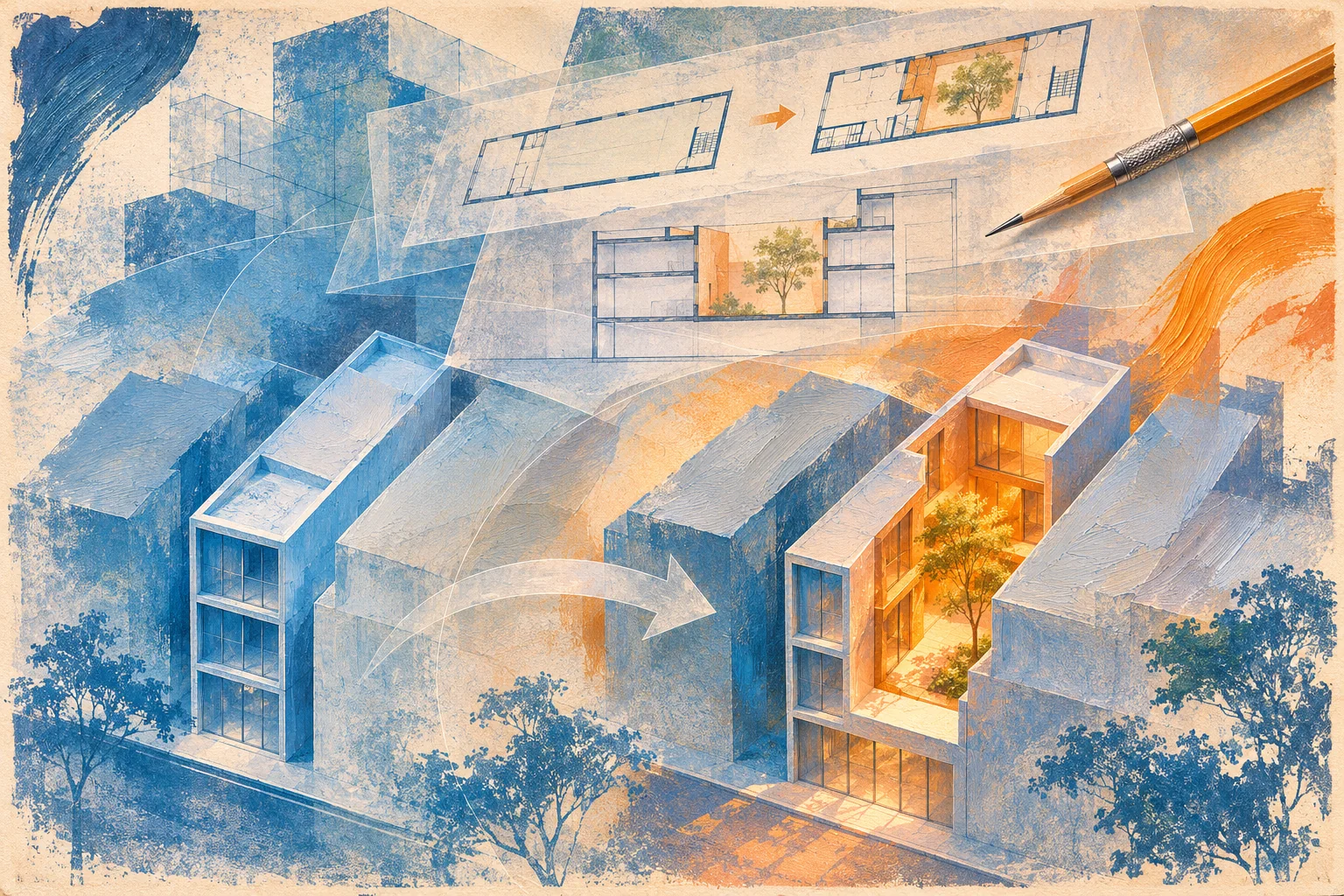
A finished building is easier to understand when a reader can see a problem the design was intended to address. Choose a project you have permission to discuss and identify one documented constraint, such as a narrow site or a need to preserve an existing tree.
Connect it to a decision.
In three sentences, describe the constraint, the specific design response and how the two relate. For example, a hypothetical project on a narrow lot might place a courtyard between rooms to bring daylight into the interior. Use a real detail from your own project and make clear who was responsible for the decision.
Check the evidence.
Review drawings, project notes and the completed work with the team. Distinguish a design intention from a measured result: a courtyard may have been intended to admit daylight, but claims about actual light levels require appropriate evidence. Avoid implying that one design choice solved every challenge.
Confirm what can be shared.
Check the project owner’s permission before sharing plans, location details or photographs. Confirm photographer credit and intended usage rights, and ask whether a project partner should be credited. Omit private or sensitive information.
Offer a clear editorial angle.
In a short note to a relevant design editor, describe the constraint and the response, and offer an approved image or drawing that shows the relationship. This gives the editor a specific idea to assess while leaving the story and coverage decision to the publication.